How I securely take care of your wedding photos

When you book a wedding photographer, you're trusting them with something that can’t be repeated. Moments that happen once, people all in one place, and a day that moves fast. So beyond how your photos look, it really matters how carefully they’re looked after.

This post explains, in plain English, what I do to make sure your wedding photos are kept safe at every stage - from the moment I press the shutter to long after I get home.

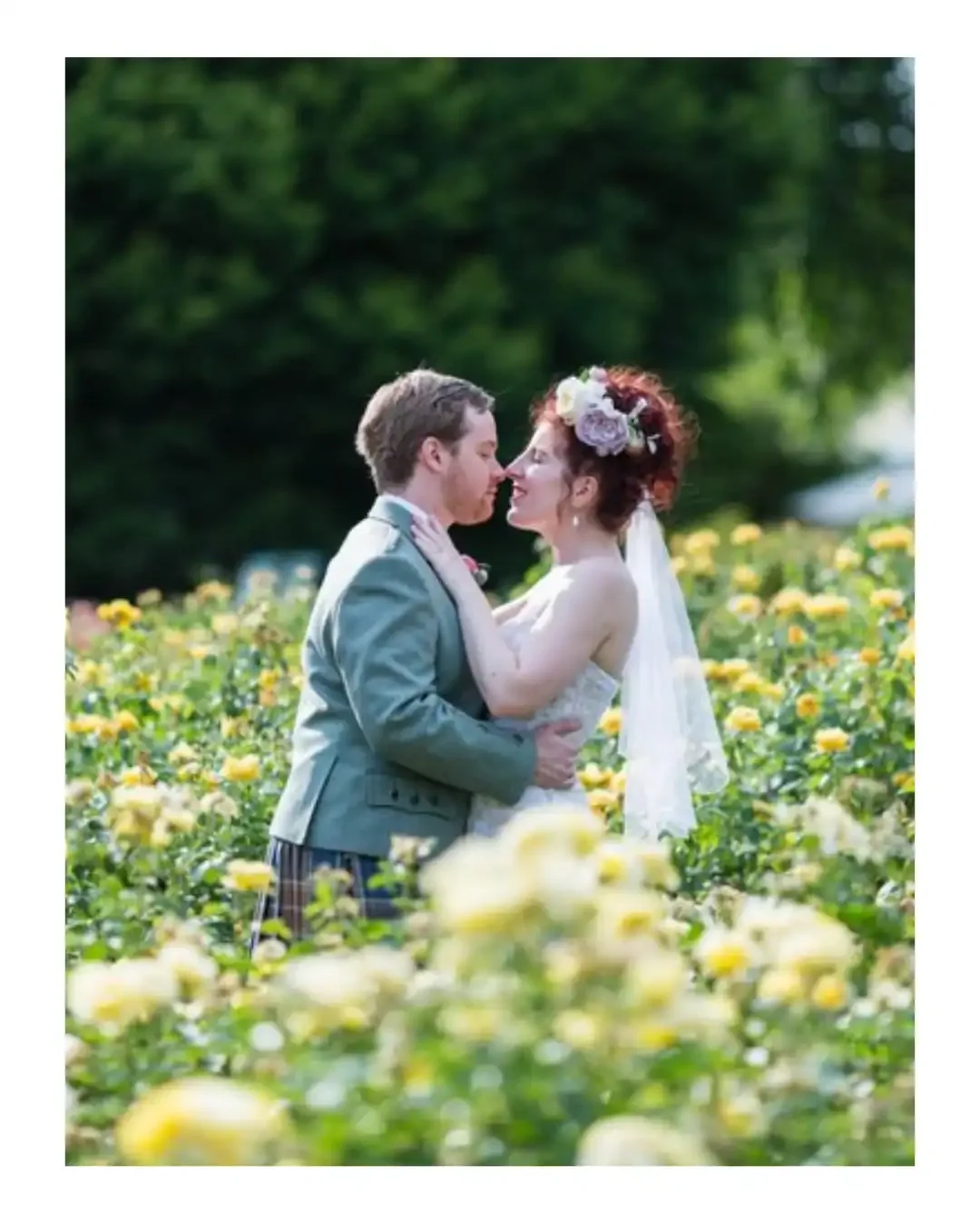
Bride giving groom a bear hug while standing in a field, flowers in foreground

Three cameras, not one

As a professional London wedding photographer, I bring three professional camera bodies to every wedding.

I mainly shoot on two cameras throughout the day, with a third ready to go if needed. Cameras are very reliable, and I’ve never had one fail at a wedding (this has never happened, but it could) - but equipment is still equipment, and things can go wrong.

Having three cameras means I’m never relying on a single body, or even just one backup. If one camera were to malfunction, I can switch instantly and keep shooting without missing anything.

Dual card slots - every photo saved twice

Every camera I use has dual card slots. That means every single photo is written to two memory cards at the same time.

If one card were to become corrupted (this has never happened, but it could), there is already a complete copy on the second card. This isn’t a backup done later - it happens in real time as I’m shooting.

So from the moment your photos are taken, they already exist in two places.

Separating the cards before i leave

At the end of the wedding, before I leave the venue, I remove the backup cards from my cameras.

Those cards go straight into a card wallet, which I keep safely in my breast pocket. The primary cards stay in the cameras, inside my camera bag.

This means your images are physically separated. Even in a worst‑case scenario - like my camera bag being lost or stolen (this has never happened, but it could) - your photos are still with me and protected.

Backing everything up as soon as i get home

When I get home, it doesn’t matter how late it is. Your images are transferred straight away.

I copy the photos to:

  • my main working hard drive

  • a separate backup hard drive

  • a secure cloud server

Why this matters

Most couples never ask about this stuff, and that’s completely understandable. You shouldn’t have to worry about it.

But I think part of being a professional wedding photographer is quietly taking responsibility for the things you never see. Redundancy, backups, and systems that are in place just in case.

Your wedding photos matter. They’re not just files - they’re memories, family history, and moments you’ll come back to for decades. I treat them that way from start to finish.

John Lennon & Yoko Ono inspired wedding photograph

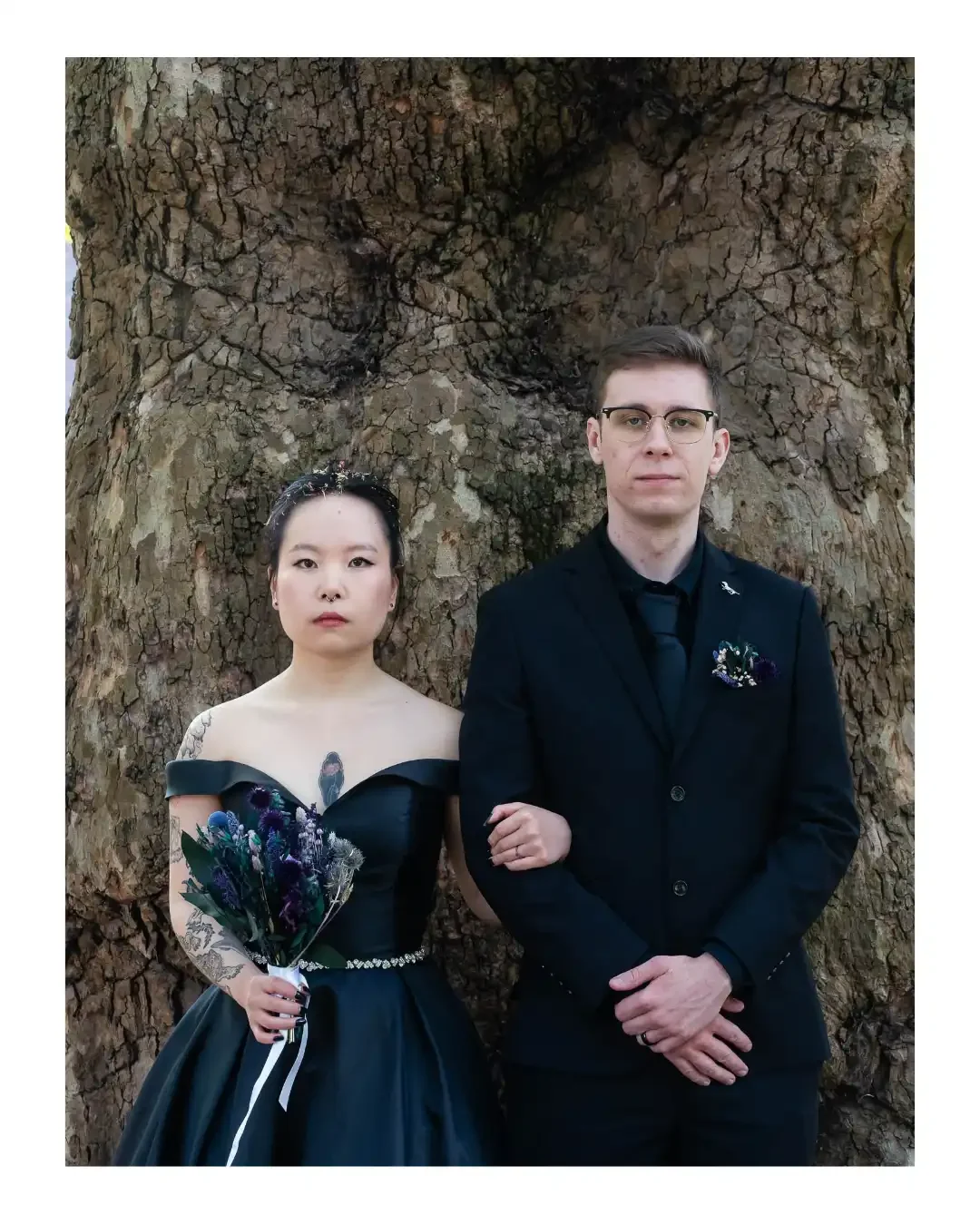
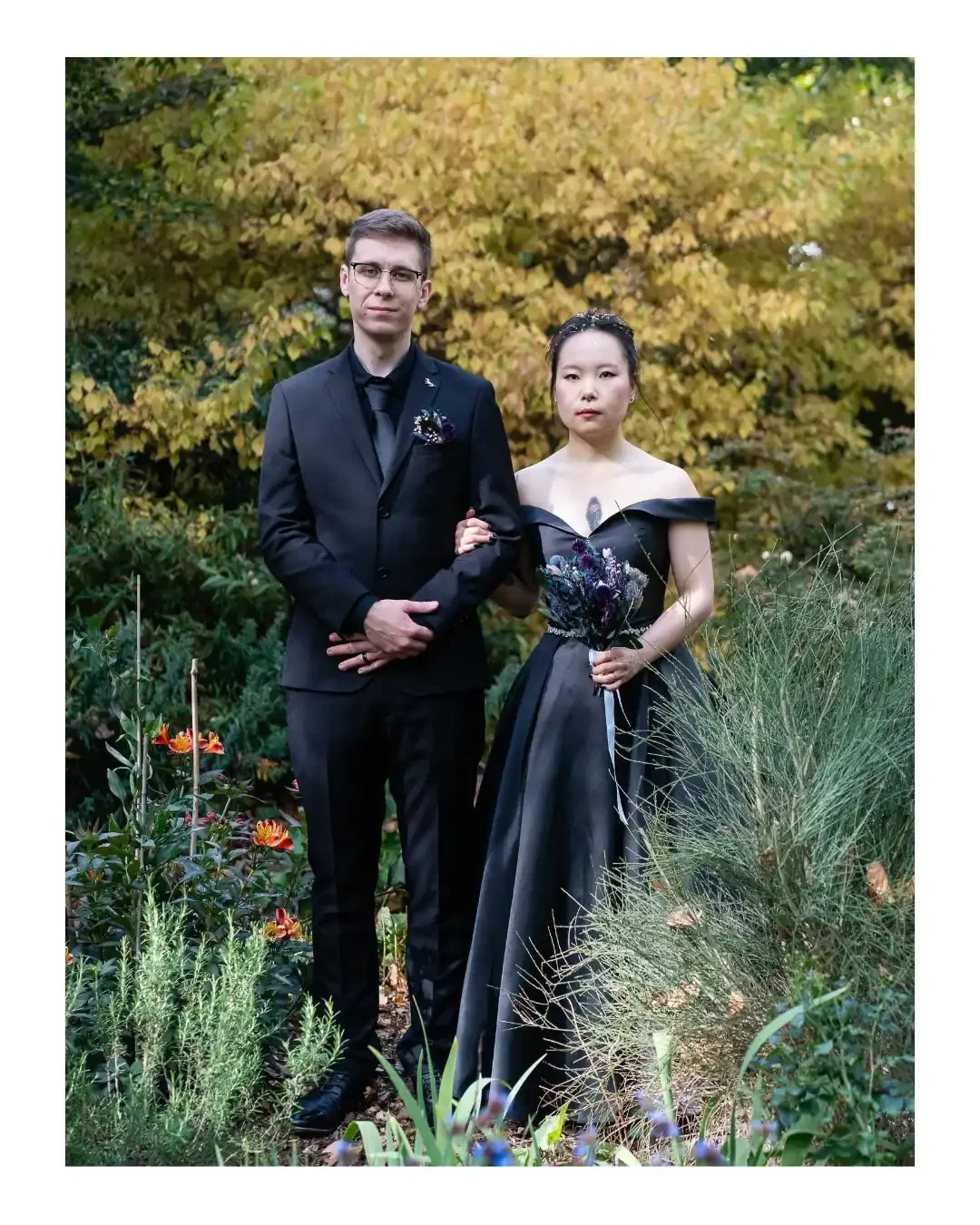
I’ve always loved the cover of the Plastic Ono Band’s first album. John and Yoko under a tree. No props, no fuss, no performance. Just two people, a bit of negative space, and a feeling that what you’re looking at is honest. It’s one of those images that feels completely natural and completely intentional at the same time. I’ve carried it around in my head for years without really thinking about it.
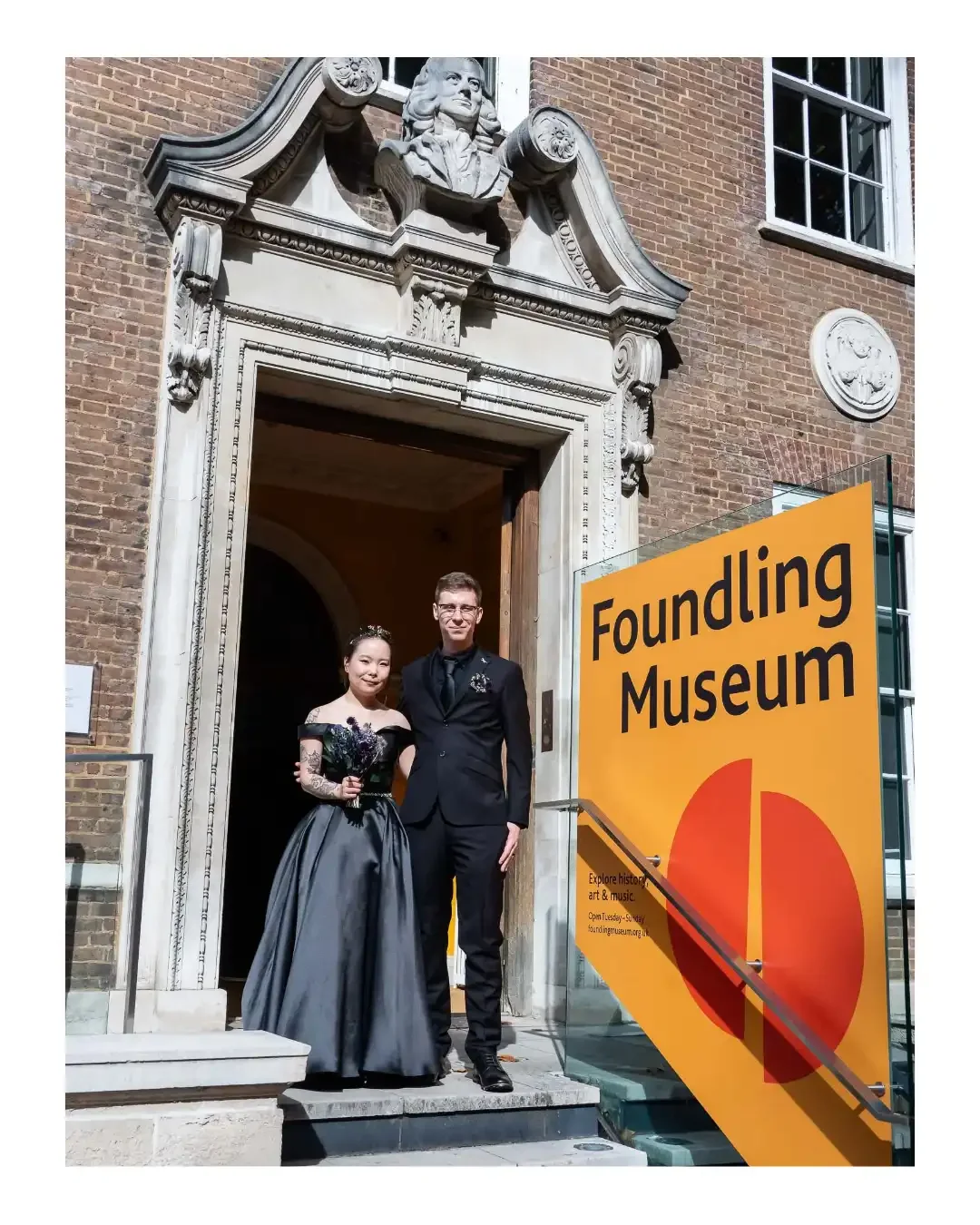
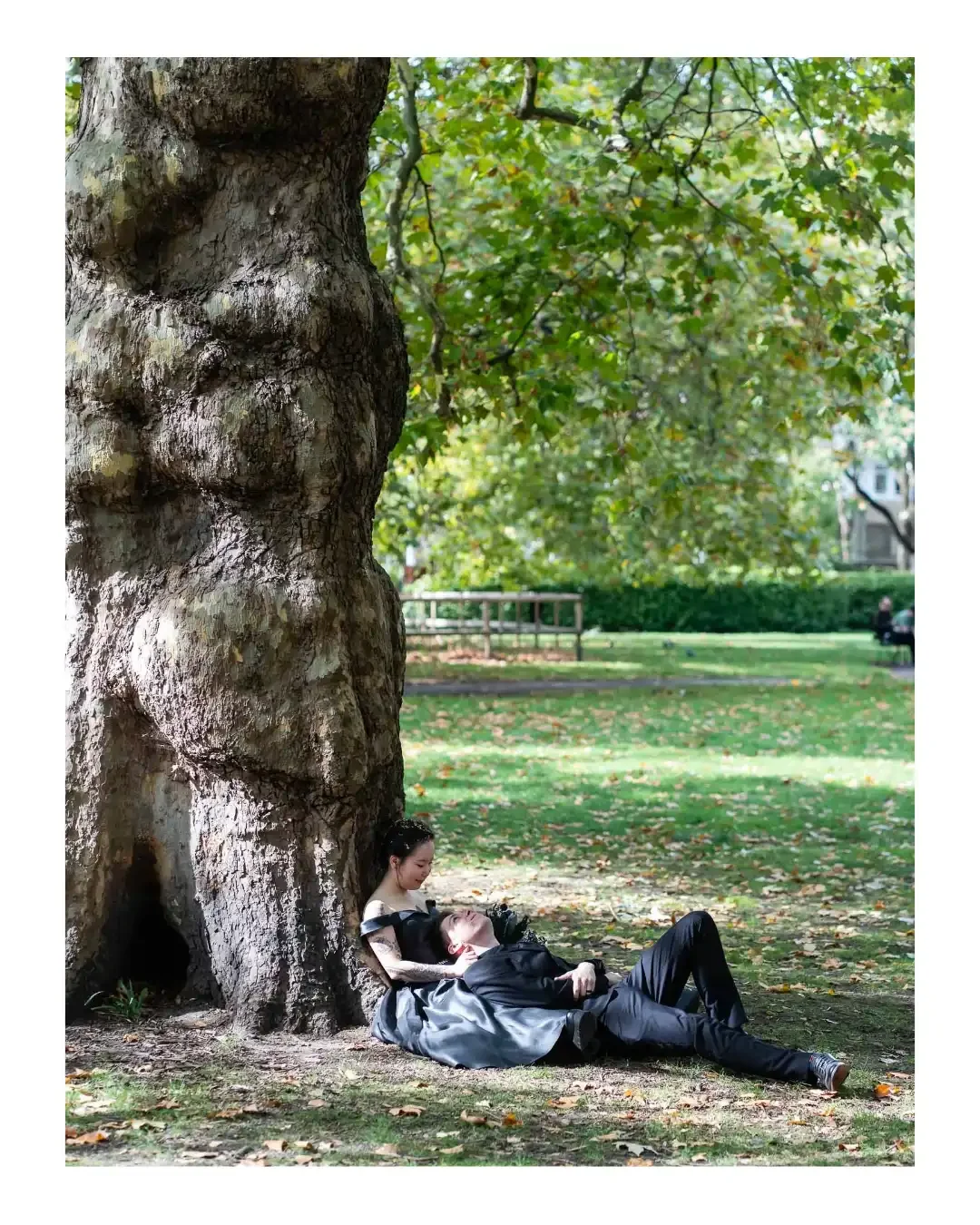
I shot this photo (not the John and Yoko one, the second one) at a wedding at the Foundling Museum in London (@foundlingmuseumevents). During the couple portrait shoot, we slipped out to Brunswick Square Gardens, which sits just across the road. It was autumn, the light was soft and diffuse, and the oak trees were doing that thing they do when the season starts to turn. Everything slowed down a bit.

As soon as we walked under the trees, the album cover popped into my mind. Not in a forced way, more like a nudge. The composition, the spacing, the way the branches framed the couple. I showed them the image on my phone and asked if they’d be up for loosely recreating it. No pressure, no exact copy, just the spirit of it. They were into it, which always helps.

What I like about moments like this is that they don’t feel staged, even though there’s an idea behind them. The couple weren’t acting or posing in any dramatic way. They were just standing together, comfortable, present, and connected. My job was mostly to notice it and get out of the way.

Sometimes one good image you’ve lived with for years shapes how you see the world without you realising it. It sits there in the background, and then one day, the light, the place and the people line up, and it quietly finds its way back out through the camera.

Wedding couple lying down, leaning against an oak tree
John Lennon and Yoko Ono lying down, leaning against a tree

London wedding photography prices explainer

Wedding photography prices can feel confusing, frustrating, and sometimes completely disconnected from reality.

You’ll see photographers charging £2,000, £3,000, even £5,000 for a single day. And naturally, couples ask: what am I actually paying for?

This post is a clear, honest breakdown of what goes into wedding photography costs - and why my prices are less than half what many other professional wedding photographers charge. Not because I’m half as good. But because I think large parts of the wedding industry are overpriced.

Wedding couple in sunglasses standing on front of Poor Things cinema sign

What you are actually paying a wedding photographer for (apart from the obvious)

Let’s break it down properly.

1. The wedding day

On the day, I’m typically working 8 to 10 hours. I’m focused, switched on, managing light, moments, people, and energy constantly. It’s not casual work.

This part matters, but it’s only one slice of the job.

2. Prep and planning

Before the wedding, there are emails, calls, timelines, logistics, and planning. I don’t outsource this. You’re dealing with me directly, from first contact to final delivery.

3. Equipment (and backups)

I shoot with professional cameras, lenses, lighting, and backup gear. This equipment is expensive to buy, insure, maintain, and replace. There are no shortcuts here if you want reliable results.

4. Post-production (this is the big one)

After the wedding, I spend many hours:

• culling thousands of images

• editing for colour, consistency, and tone

• exporting, backing up, and delivering your gallery

This is skilled, time-consuming work. It’s where a huge amount of the final look comes from.

5. Business costs

Like any self-employed photographer, there are ongoing costs:

• insurance

• software

• website and gallery hosting

• admin and accounting

• unpaid time running the business

6. So why are some wedding photographers prices so high?

Here’s the honest bit.

Many photographers price high because the wedding market allows it. There’s an assumption that weddings equal big budgets, and prices have risen to match that perception - not always the actual workload.

High price does not automatically mean higher quality, more care, or a better experience. Sometimes it just means the market will bear it.

That doesn’t sit right with me.

7. Why I charge less than half the "industry standard" wedding photographer

My pricing is based on something simple: covering my costs, paying myself fairly for my time, and keeping things accessible.

When you break it down, my work comes out at roughly a £250 day rate once the wedding day and all post-production are factored in.

I’m not racing to build a luxury brand or squeeze every possible pound out of a couple because it’s their wedding. I’d rather do great work, be calm and present on the day, and charge a price that actually feels reasonable.

8. Does cheaper wedding photography mean cutting corners?

Not necessarily, and certainly not in my case! You still get:

• a calm, experienced London wedding photographer

• a natural, editorial, documentary approach

• careful editing and consistent delivery

• reliability, backups, and professionalism

• someone who won’t add stress to your day

What you’re not paying for is inflated margins, luxury positioning, or artificial scarcity (there are a lot of wedding photographers who claim that they will shoot a max of say 10 or 20 photos a year, so that they can give you the best service. Sounds great, but in effect, you’re paying them an inflated price so that they don’t have to shoot more weddings!)

Wedding photography should be valued. It’s skilled work and it deserves to be paid properly. But it doesn’t need to be exploitative.

My prices reflect the real work involved, not the idea that weddings are a blank cheque. If you want honest pricing, strong work, and a photographer who treats your wedding like a human event rather than a luxury product, that’s exactly how I operate.

I’m very transparent about my pricing. You’ll find everything clearly laid out on my wedding photography pricing and packages page.

My approach to your day as a wedding photographer

If you’ve booked me as your wedding photographer, or you’re thinking about it, here’s exactly what you can expect from me on your wedding day. I’m a London wedding photographer who works in a natural, editorial, unposed way – calm, observant and focused on capturing the day as it actually felt. No awkward staging, no over-the-top direction, and no adding stress.

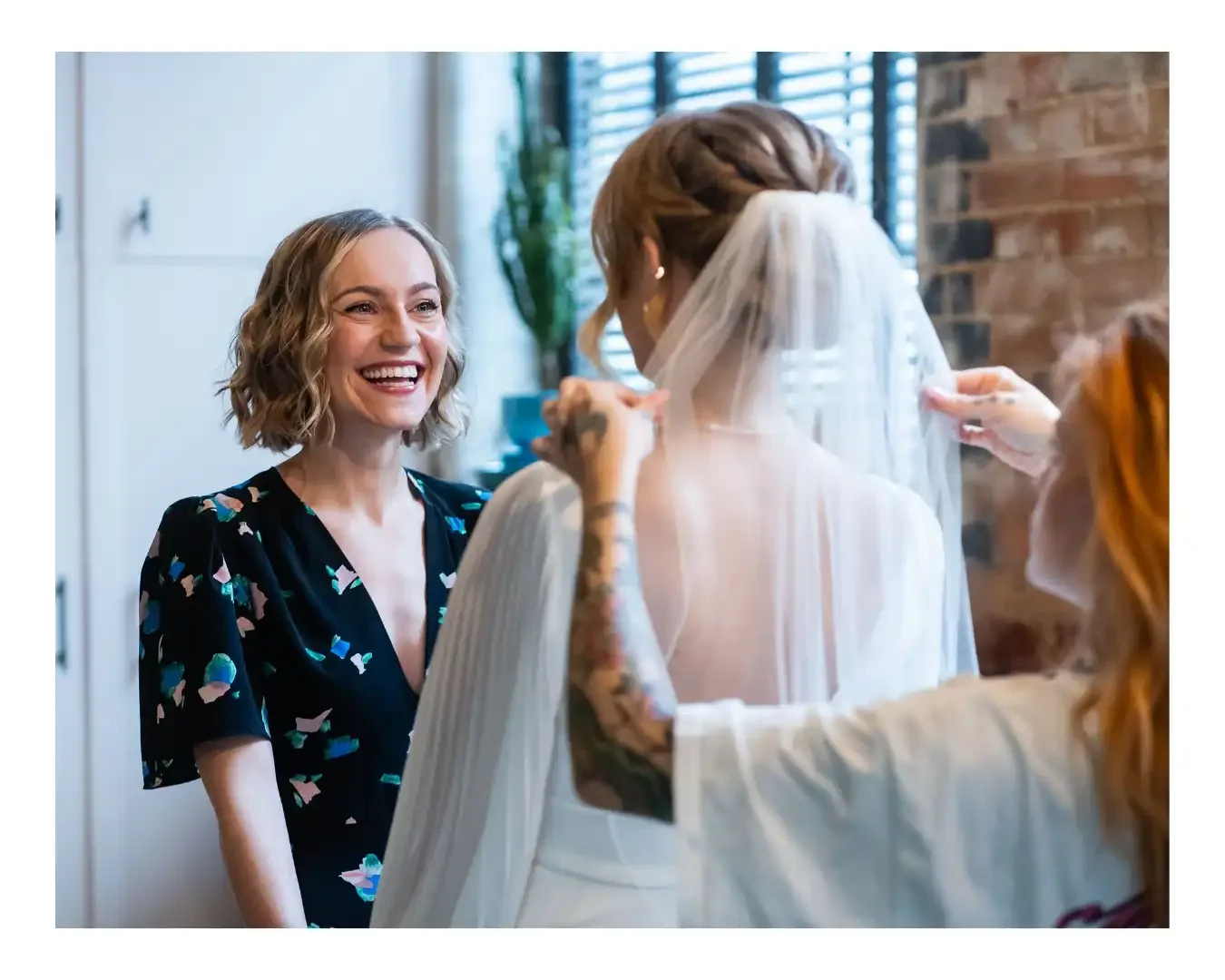
bride looking in mirror while bridesmaid adjusts back of dress

A calm, grounding start to the day

If you want, I’ll arrive during the getting-ready part of the morning and settle into the room quietly. I’m there to document the atmosphere – the details, the nerves and the laughter – without taking over. You’ll barely notice me, but I’ll be capturing everything that sets the tone for the rest of the day.

Natural direction when it actually helps

I’m not a bossy photographer. I won't be shouting at your guests! But I will stage manage and coordinate the group shots so that we can get them done efficiently and stress-free within about 15 minutes.

Someone who catches the real moments

Throughout the day I’m watching for the things you might miss: reactions, emotion, hugs, glances, and all the fun. My style is observational, so the final gallery feels like an honest, warm document of your wedding – not something manufactured.

flash when it adds to the story

I do use flash when it helps keep the look consistent – especially in low light, evening spaces or on the dance floor. It’s never harsh or distracting. It’s a tool I use carefully to make sure your photos look clean and vibrant.

Group photos done Quickly and efficiently

Group photos do not need to take forever. I run this part calmly and efficiently, and it usually takes about 15 minutes. I’ll organise people, give clear direction, and keep everything moving so you’re not standing around endlessly.

Relaxed portraits in just 15 minutes

Couple photos are quick, natural and easy. About 15 minutes is all we need to get a set you’ll love. No stiff posing. No disappearing for an hour. Just the two of you having a short breather, walking, talking, and letting the moments happen.

Blending in during the reception

Whether it’s a London pub, an East London hipster warehouse, or a garden, I adapt quickly to whatever’s happening. You’ll see me moving quietly around the room, capturing the speeches, reactions, details and atmosphere without interrupting anything.

Evening coverage with energy

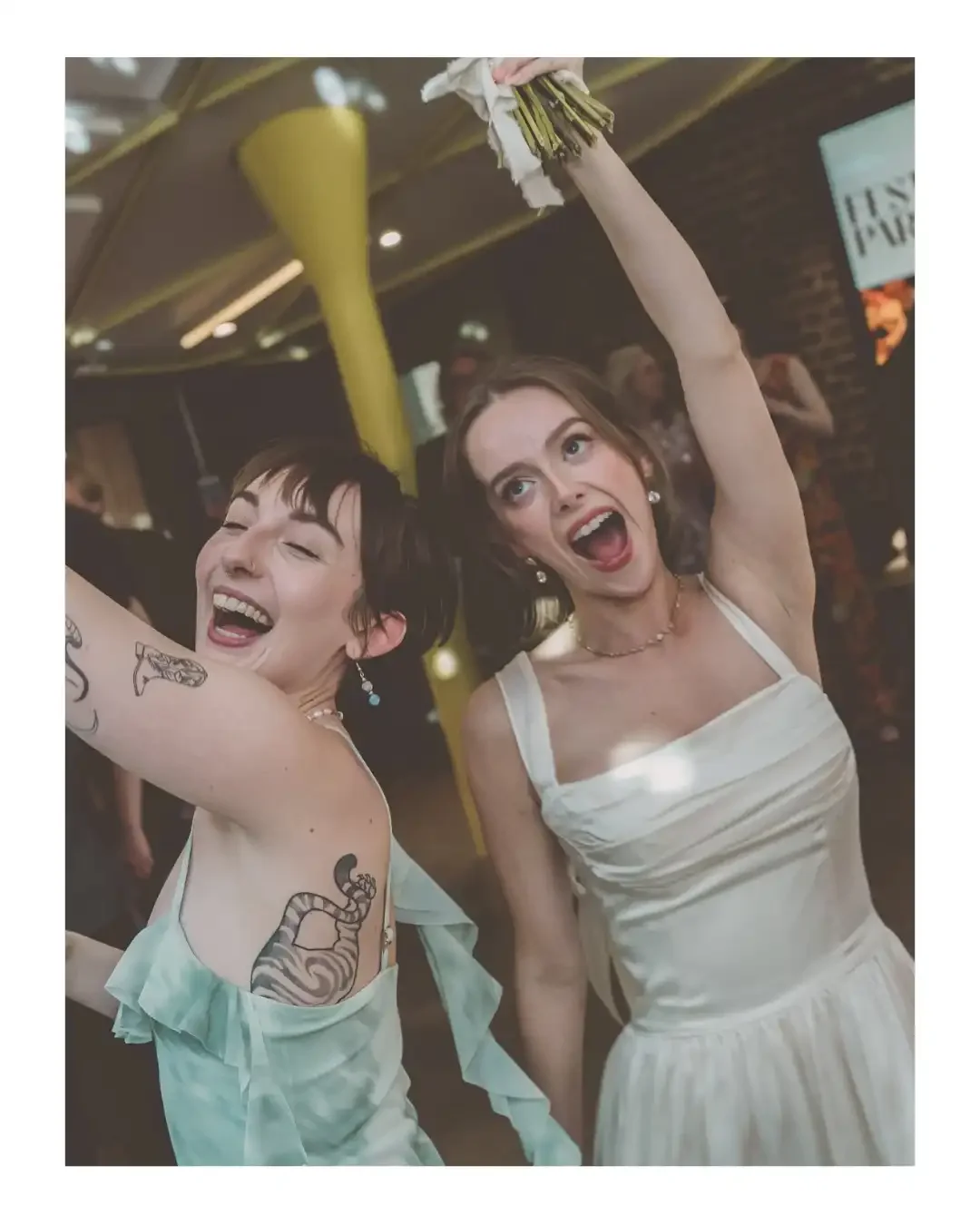
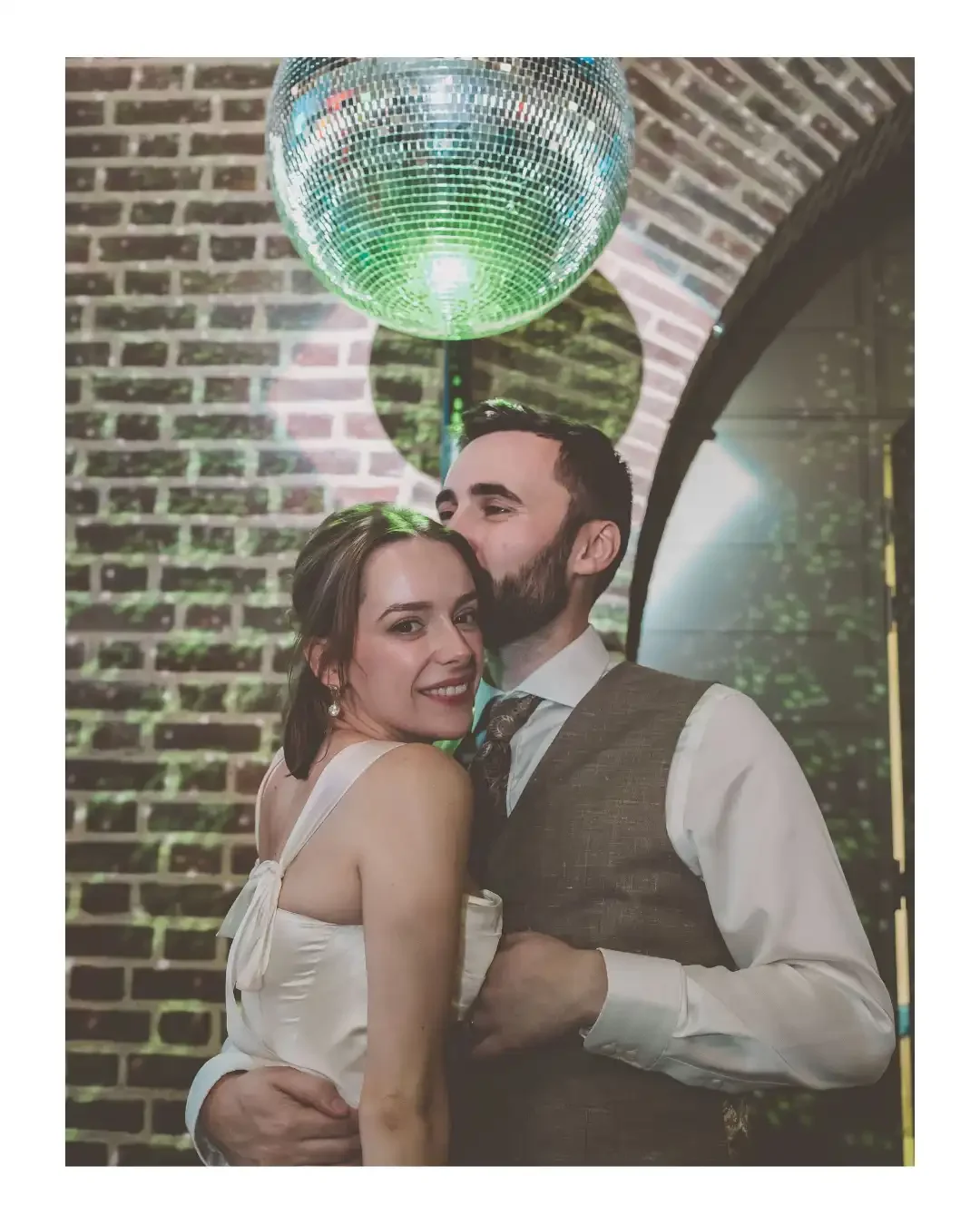
Once the dance floor starts, I’m right in the mix – using a combination of flash and ambient light to capture the energy, movement and messiness of a proper party. You’ll get photos that feel alive, not stiff.

Above all: calm, organised and consistent

Couples book me for my photos, but they recommend me for the experience. Check out my 200+ five-star Google Reviews! I’m calm, unobtrusive, organised and focused on making the day feel easier, not more complicated. I’m there to support you, keep things moving smoothly and document the day honestly.

If you want photos that feel natural, editorial and genuinely "you", and a photographer who works quietly in the background while keeping things running smoothly, that’s exactly what I bring.

Tags: london wedding photographer, wedding photographer

Will direct flash still look cool in 20 years?

Will direct flash still look cool in 20 years?

Direct flash is soooo cool right now, but don’t you also want your wedding photos to feel kinda timeless? As a London wedding photographer, I see trends come and go all the time, and direct flash is definitely having its moment.

Read More

The tricky art of photographing wedding speeches

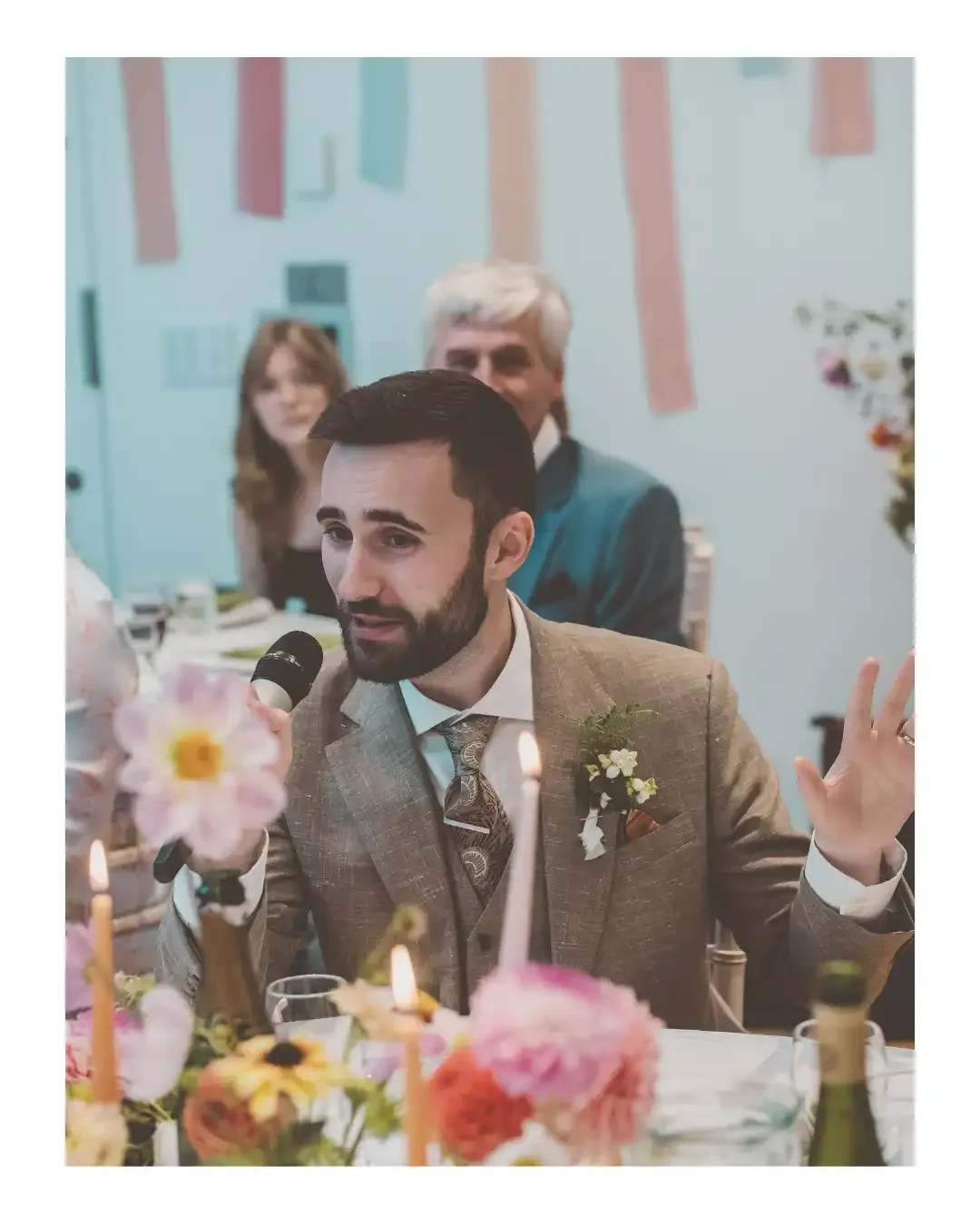
For a wedding photographer, the speeches are often one of the most challenging parts of the day to make visually interesting. On the surface, it’s just a group of people standing up and talking. There’s no movement, no change of scene, and usually very little control over where people stand or how they hold themselves. But within those limits, there are still moments worth paying attention to.

Laughter is the obvious one. So is the toast. I always make a point of getting a frame of the toast because it neatly sums up what the speeches are about - connection, celebration, a shared pause before the glass is raised. When I’m positioning myself for that moment, I’m thinking about layers and sightlines. Where are the hands going to be? Is the glass going to cut across someone’s face? Can I line things up so the gesture adds something rather than distracts?
In this case, the speaker raised his champagne flute to a position I wasn’t expecting. Instead of sitting neatly to one side, it obscured his face almost entirely. There was no time to wait it out, because these moments last seconds at most. So I shifted my position just slightly, enough so that the stem of the glass ran straight between his eyes.
That tiny adjustment changed everything. The image suddenly had symmetry and balance, and the interruption of the glass became the point of the photograph rather than a problem to avoid. It’s a bit kooky, slightly unexpected, and very human.
This is the kind of thing I’m always looking for during speeches. Not just who’s talking, but how people are reacting, how objects move through the frame, and how small changes in position can turn a potentially awkward moment into something playful and memorable. Speeches might look static, but if you stay alert, they’re full of these fleeting visual opportunities.

Best man raising champagne flute

Vintage/retro style wedding photography for modern couples

A skilled professional wedding photographer creates ‘instant nostalgia’. And for brides, grooms and photographers born in the 70s-90s, there’s nothing more nostalgic than faded photos with rich yet washed out colours.

You’ll maybe also notice a bit of Wes Anderson form and symmetry in this and many other photographs across my wedding photography portfolio. That’s deliberate! Read about my wedding photography visual aesthetic. But in short, especially for couples who freeze in front of the camera, I suggest simple poses like this. It looks like a classic editorial wedding photograph, but is just so easy for any couple to do - no matter how camera shy they are.

But the editorial and retro style isn’t just about how I pose couples. It’s also about the filter I apply to your wedding photographs. I offer clients a wide range of finishes on their images, from black and white to vintage, retro, 70s, Polaroid style images.

Wedding couple holding hands in Wes Anderson style image in front of flock wallpaper

Quirky London wedding photography backdrops

The best wedding photographs are almost always unplanned and spontaneous. They happen in the gaps - the moments between the “important” bits - when everyone relaxes and the day feels real. This photo was taken literally five minutes before I was due to leave this wedding. No planning, no schedule, no big setup.

I always like to get a quick parting shot with couples if time allows. As we stepped out of the Round Chapel on Lower Clapton Road in Hackney, I spotted a late-night laundrette with its door still open. The light was great, the setting was unexpected, and it felt very London. We popped in, and within two or three minutes we’d taken a handful of photos. They’re slightly posed, but relaxed, playful, and very much “them”. Those images ended up being the couple’s favourite photographs from the entire wedding day.

That moment sums up how I work as a London wedding photographer. My approach is rooted in documentary wedding photography - natural, observational, and unposed. I’m there to quietly record what actually happens, rather than directing or staging the day. Around 95% of every wedding I photograph is completely unposed: people arriving, hugging, laughing, drinking, dancing, and being themselves.

That said, I’m not anti-posing. Group photos and couple portraits do need a bit of gentle direction, otherwise they quickly become awkward or stressful. I keep these parts short, calm, and informal, so they don’t take over the day. Sometimes, like with this laundrette photo near the Round Chapel, a lightly posed moment can still feel spontaneous and genuine.

There’s a wry humour and visual quirkiness to my work that’s often compared to Martin Parr or Wes Anderson - not in a stylised or forced way, but in noticing the odd, funny, very human details that make weddings unique. Especially in London, with its streets, venues, and late-night corners, those moments are always there if you’re paying attention.

That’s what I’m always looking for: honest wedding photography that feels natural, personal, and quietly memorable.

wedding couple arm in arm in launderette